
April 19, 2026, 8:06 p.m.
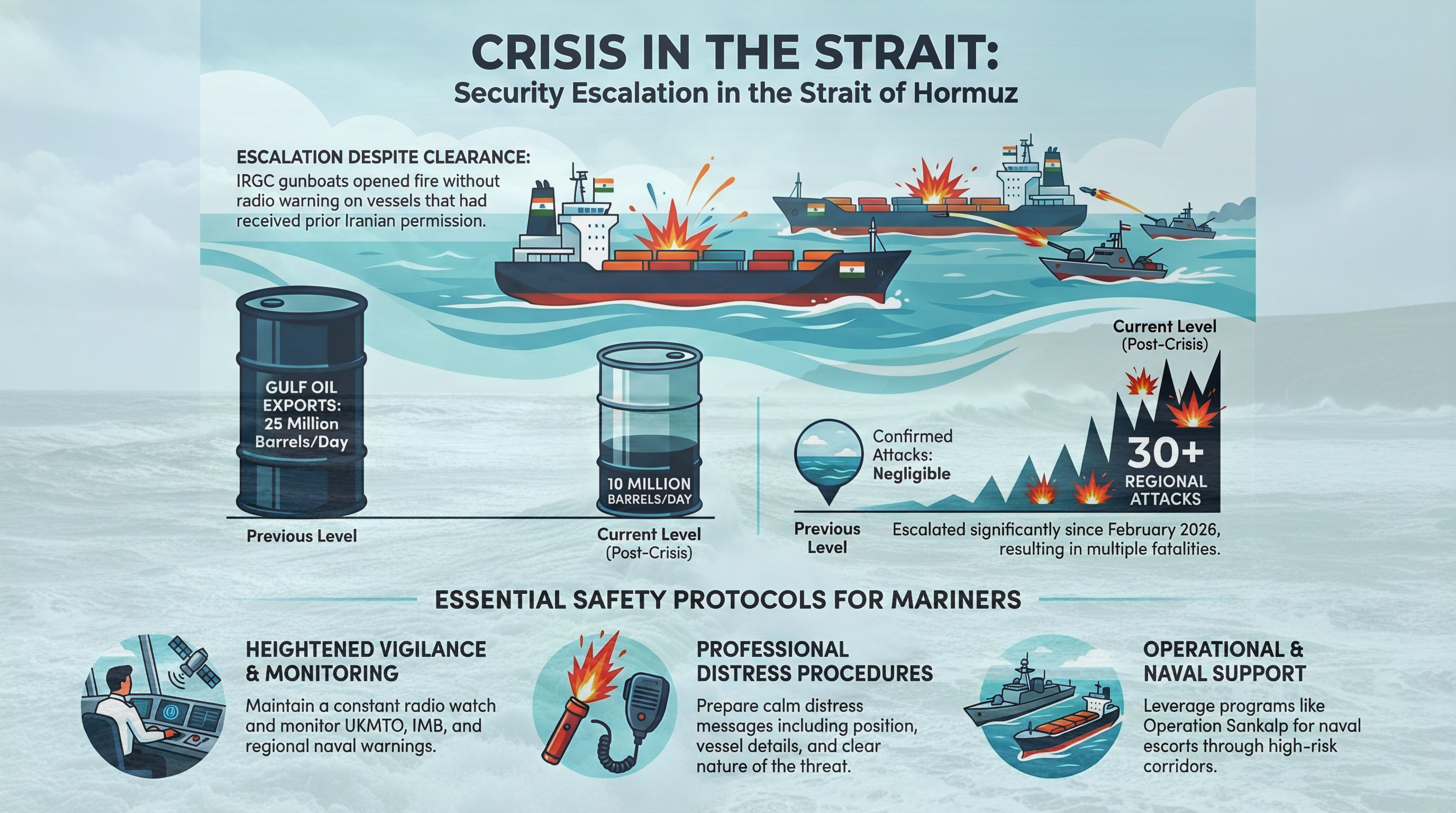
On April 18, 2026, two Indian-flagged ships came under gunfire from Iranian Islamic Revolutionary Guard Corps (IRGC) gunboats while transiting the Strait of Hormuz. The vessels were forced to turn back, highlighting ongoing risks in one of the world's most critical shipping chokepoints. This event has raised serious concerns for merchant mariners operating in high-tension areas.
According to reports from the UK Maritime Trade Operations (UKMTO), the very large crude carrier (VLCC) Sanmar Herald, loaded with approximately two million barrels of Iraqi crude oil, and the Jag Arnav were passing through the strait when two IRGC gunboats approached and opened fire without prior radio warning. The Sanmar Herald had reportedly received permission from Iranian authorities to proceed earlier, yet the situation escalated rapidly.
A crew distress call captured the tension. One voice stated, "You gave me permission to go. You are firing now. Let me go back." The message referenced the Sepah Navy, the naval branch of the IRGC. Both ships altered course and headed west. Vessel tracking data placed the incident about 20 to 25 nautical miles northeast of Oman. No injuries were reported among the Indian crew members.
In a related development, a projectile struck a nearby container ship in the same corridor. The impact damaged several containers, but authorities confirmed no fires, no environmental pollution, and no casualties on that vessel.
India responded swiftly at the diplomatic level. The Ministry of External Affairs arranged a meeting between Foreign Secretary Vikram Misri and Iranian Ambassador Mohammad Fathali. During the discussion, India expressed deep concern over the safety of merchant vessels and their crews. Officials noted Iran's past assistance in facilitating safe passage for ships bound for India and urged Tehran to resume measures that ease transit for Indian-linked shipping as soon as possible. The ambassador agreed to convey these points to his government.
Broader Context for Mariners
This incident occurred shortly after Iran briefly reopened the Strait of Hormuz on April 17, following a temporary ceasefire agreed on April 8. However, authorities reimposed strict controls after the United States Navy took actions against Iranian ports on April 13, which Tehran viewed as a violation of the ceasefire terms. The Supreme National Security Council of Iran stated that its forces had resumed intense management of the waterway and would maintain this posture while the US blockade continued. The temporary ceasefire was scheduled to expire on April 23.
The Strait of Hormuz remains a vital route for global oil transport. Since the crisis intensified in late February 2026, maritime security reports indicate at least 30 confirmed or claimed attacks on commercial vessels in the region. These have included tragic losses, such as two Indian crew members killed aboard the Palau-flagged Skylight and four fatalities when the UAE tugboat Mussafah 2 sank.
In response to earlier restrictions, the Indian Navy conducted Operation Sankalp, successfully escorting five Indian-flagged LPG carriers through the Gulf of Oman between March 14 and 24. Gulf oil exports have fallen sharply, dropping by around 60 percent from roughly 25 million barrels per day to about 10 million barrels per day.
Key Lessons for Seafarers
1. Heightened Vigilance in Chokepoints: Even with prior clearance, situations in the Strait of Hormuz can change quickly. Maintain constant radio watch on all relevant frequencies and monitor UKMTO, IMB, and regional naval warnings.
2. Distress Procedures: Crews should prepare clear, calm distress messages that include position, vessel details, and nature of threat. Record all communications if possible.
3. Route Planning and Risk Assessment: Companies and masters must review current advisories before entering high-risk areas. Alternative routing or convoy options may be necessary.
4. Diplomatic and Operational Support: Flag states can provide rapid diplomatic intervention. Mariners should know their company's emergency contact protocols and the role of organizations like the Indian Navy in such scenarios.
5. Crew Safety First: No injuries occurred in this case, but the potential for escalation is real. Drills on abandonment, damage control, and non-lethal response remain essential.
This event serves as a reminder that geopolitical tensions directly affect the daily work of merchant mariners. Safe navigation depends on up-to-date intelligence, professional bridge team management, and adherence to best practices in maritime security.
Adapted and rephrased from original reporting by Marine Insight and supporting updates from UKMTO and official statements.
There are no comments.
Similar Posts
-
US Leads International Effort to Restore Freedom of Navigation in the Strait of Hormuz
April 30, 2026, 5:38 p.m.
-
Shipping Industry Urges Caution on Strait of Hormuz Transit Despite Political Claims of Open Passage
April 17, 2026, 6:35 p.m.
-
Navigating the Strait of Hormuz: Regional Perspectives and Security Trends
April 22, 2026, 6:38 p.m.
-
Drone Strike on Izmail Port: Foreign-Flagged Vessels Damaged in Black Sea Corridor
April 15, 2026, 6:35 p.m.