Security Awareness Training (SAT)

- 🪪Passport or ID card
Certificate Issuance & Details
Instant Digital Credential
Upon successfully completing the course and passing the final scenario, you will immediately receive a personalized PDF certificate. This credential is officially issued by MS Ltd. (a strategic partner of SAIL AI) and is fully approved by the local Marine Administration where MS Ltd. is registered and located.
Security & Recognition
Each certificate is designed to meet global standards:
- Digitally Signed: Authenticated for validity.
- Timestamped: Records the exact moment of issuance.
- Secure: Features a unique verification code, ensuring it is recognized and respected by maritime professionals worldwide.
Access & Hard Copies
You can download and reprint your digital certificate at any time. If you prefer a professional hard copy, we offer optional worldwide delivery (shipping fees apply).
100% Money-Back Guarantee

We believe in the quality of this course — and we want you to feel safe trying it.
If you feel the course didn’t meet your expectations, just email us within 3 days of purchase.
Security Awareness Training (SAT) is mandatory for all crew members on ships required to comply with the provisions of the International Ship and Port Facility Security (ISPS) Code. It is regulated by STCW Convention Regulation VI/6, paragraph 1, and STCW Code Section A-VI/6, paragraphs 1-3.
The purpose of this training is:
- To ensure that every seafarer, regardless of their rank or duties (including hotel staff on passenger ships, cadets, etc.), has a basic understanding of the importance of ship security and their role in maintaining it.
- To enhance the overall security culture and vigilance on board the vessel.
- To teach how to recognize potential security threats and know how to react correctly and whom to report to.
Who must undertake this training:
All persons employed or engaged in any capacity on board a seagoing ship to which the ISPS Code applies. This training must be completed before being assigned any shipboard duties, unless the seafarer can demonstrate equivalent prior training or service on a ship before the ISPS Code requirements came into force.
Key Content of the Course (What seafarers are taught):
- Importance of Ship Security: Understanding why security is important and the potential consequences of security incidents (e.g., for human life, the ship, cargo, the environment, company reputation).
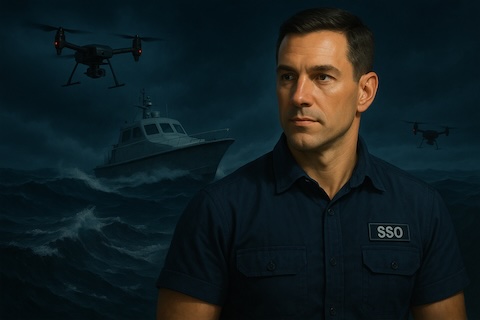
- Roles and Responsibilities: A general understanding of the duties of various organizations and individuals responsible for security (Company Security Officer - CSO, Ship Security Officer - SSO, Port Facility Security Officer - PFSO, other crew members).
- Security Levels: What Security Levels 1, 2, and 3 mean, and the general types of measures that may be implemented at each level. Seafarers must understand how a change in security level affects procedures on the ship.
- Ship Security Plan (SSP): A general understanding of what the SSP is and why it is needed, without disclosing confidential details. Knowledge of procedures relevant to their personal duties (if any, even the most basic ones).
- Threat Recognition: The ability to recognize potential security threats, such as:
- Weapons, explosives, and incendiary devices.
- Signs that someone might pose a threat (suspicious behavior).
- Signs of unauthorized access.
- Methods used to overcome security measures.
- Actions upon Threat Detection: Knowledge of procedures for reporting suspicious activities, persons, or objects to the Ship Security Officer or another authorized person.
- Security Procedures: Understanding basic access control procedures, screening, the need for vigilance during watchkeeping and routine duties.
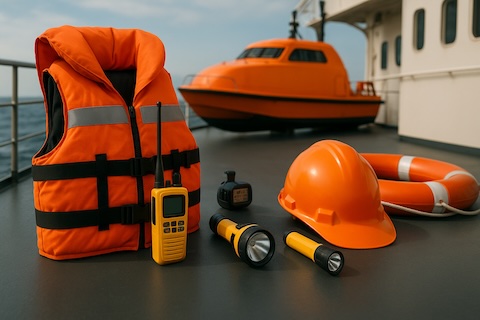
- Security Equipment: General awareness of the types of security equipment that may be used on the ship.
- Emergency Contingency Plans: Basic knowledge of security-related emergency contingency plans.
Why is this important for everyone?
Every person on board is part of the ship's security system. Even if a seafarer does not have specific security duties (like gangway watch), they might be the first to notice something suspicious during their normal work or rest periods. Their vigilance and knowledge of how and whom to report their observations to can prevent a serious incident. Therefore, a basic understanding of security matters is essential for everyone without exception.
-
Module 1SAT Course Preview
-
Module 2Introduction to Security Awareness for All Seafarers (ISPS/STCW)
-
Module 3Overview of Modern Maritime Security Threats
-
Module 4Maritime Security Regulatory Framework (SOLAS, ISPS, STCW)
-
Module 5Key Definitions and Concepts in Maritime Security (ISPS Code Terminology)
-
Module 6Handling Security-Related Information and Communications
-
Module 7Roles and Responsibilities in Maritime Security (ISPS Code)
-
Module 8Threat Recognition, Circumvention Methods, and Pirate Tactics
-
Module 9Ship Security Procedures, Actions, Training, and Drills

June 8, 2025, 10:58 a.m.
This course was fantastic! The modules were clear, concise, and packed with practical information that I can actually use on board. I especially liked Module 7 on threat recognition—it really opened my eyes to what to look out for. The videos were engaging, and the final test was a great way to check my understanding. The S.A.I.L. certificate is a nice addition to my CV. Highly recommend this to all seafarers!

June 18, 2025, 9 a.m.
This was a good course, and I learned a lot about ship security and my role in it. The online format was convenient, and the AI features made it engaging. However, I felt the section on security equipment could have included more real-world examples or visuals of the tools we might encounter. Still, it’s a great starting point for seafarers, and the certificate is a nice touch for my professional records.

July 7, 2025, 11:03 a.m.
Overall, a solid course with a lot of useful information. The modules on roles and responsibilities and the maritime security framework were very thorough. The videos were well done, though I wish they were a bit longer to dive deeper into some topics, like emergency contingency plans. The final test was fair, and the certificate is a nice bonus. Good value for the price, but a little more depth in some areas would make it perfect.

Aug. 2, 2025, 6:08 a.m.
The course covers the basics well, and the certificate is a nice addition, but I think it needs some improvement. The content felt a bit too general at times, especially in Module 8 on ship security procedures. I was hoping for more specific scenarios or hands-on exercises to practice what we learned. Adding more interactive drills or real-life case studies would make it more engaging and practical. It’s decent, but there’s room to make it better.

Aug. 5, 2025, 5:12 p.m.
Really well-structured course! The content was easy to follow, and the AI integration made it interactive and interesting. I appreciated how they explained the ISPS Code and security levels in a way that didn’t feel overwhelming. The checklist of threats and actions is super handy, and I feel much more confident about handling security-related situations now.

Aug. 8, 2025, 11:14 a.m.
Top-notch training! As a new seafarer, I was a bit nervous about security responsibilities, but this course broke everything down perfectly. The videos were short but informative, and the examples of pirate tactics and threat recognition were eye-opening. Getting the certificate right after the final test was a great touch. I’d recommend this to anyone working on a ship.
How it works
look at this video to understand how works sail ai unique studiing program
FAQ
The Security Awareness Training (SAT) online course provides seafarers with essential knowledge to recognize and respond to security threats on board ships, in accordance with STCW Regulation VI/6 and IMO Model Course 3.27. It focuses on understanding security risks, maintaining vigilance, and contributing to shipboard security measures.
Upon successful completion of the SAT course and passing the required assessments, you will receive a downloadable Security Awareness Training Certificate, recognized by maritime authorities.
Yes, the SAT course is fully accessible online, enabling you to study at your own pace and convenience.
The course covers topics such as identifying security threats, understanding ship security levels, reporting security incidents, and following security procedures, all aligned with STCW and IMO standards.
This course is designed for all seafarers who perform duties on board ships but are not designated as Ship Security Officers, including deck, engine, and hotel crew members.
The course is priced at 99 USD, depending on your preferred currency.
The course generally requires 5 hours to complete, including theoretical lessons and practical scenarios.
What You’ll Get
- A checklist of threats and actions
- Readiness for interview
- Confidence in emergency situations
- A certificate you can add to your CV
Reviews
June 8, 2025, 10:58 a.m.
This course was fantastic! The modules were clear, concise, and packed with practical information that I can actually use on board. I especially liked Module …
June 18, 2025, 9 a.m.
This was a good course, and I learned a lot about ship security and my role in it. The online format was convenient, and the …
July 7, 2025, 11:03 a.m.
Overall, a solid course with a lot of useful information. The modules on roles and responsibilities and the maritime security framework were very thorough. The …
Aug. 2, 2025, 6:08 a.m.
The course covers the basics well, and the certificate is a nice addition, but I think it needs some improvement. The content felt a bit …
Aug. 5, 2025, 5:12 p.m.
Really well-structured course! The content was easy to follow, and the AI integration made it interactive and interesting. I appreciated how they explained the ISPS …
Aug. 8, 2025, 11:14 a.m.
Top-notch training! As a new seafarer, I was a bit nervous about security responsibilities, but this course broke everything down perfectly. The videos were short …
June 8, 2025, 10:58 a.m.
This course was fantastic! The modules were clear, concise, and packed with practical information that …
June 18, 2025, 9 a.m.
This was a good course, and I learned a lot about ship security and my …
July 7, 2025, 11:03 a.m.
Overall, a solid course with a lot of useful information. The modules on roles and …
Aug. 2, 2025, 6:08 a.m.
The course covers the basics well, and the certificate is a nice addition, but I …
Aug. 5, 2025, 5:12 p.m.
Really well-structured course! The content was easy to follow, and the AI integration made it …
Aug. 8, 2025, 11:14 a.m.
Top-notch training! As a new seafarer, I was a bit nervous about security responsibilities, but …





- 🪪Passport or ID card