April 25, 2026, 6:55 p.m.
The safety of maritime pilots during embarkation and disembarkation remains a critical concern for the global shipping industry. Despite existing regulations, accidents during pilot transfers continue to occur due to equipment failure or improper installation. To address these persistent risks, the International Maritime Organization (IMO) has approved significant updates to SOLAS Regulation V/23. These changes, finalized during the MSC 108 session and set for formal adoption at MSC 110, represent a major shift toward more rigorous safety standards for pilot transfer arrangements.
The core objective of these amendments is to modernize the technical requirements for pilot ladders and associated equipment. By refining the design, manufacture, and maintenance protocols, the IMO aims to reduce the margin for human error and mechanical failure. For seafarers and officers, understanding these updates is not just a matter of compliance but a fundamental aspect of operational safety.
Key Changes in SOLAS Regulation V/23
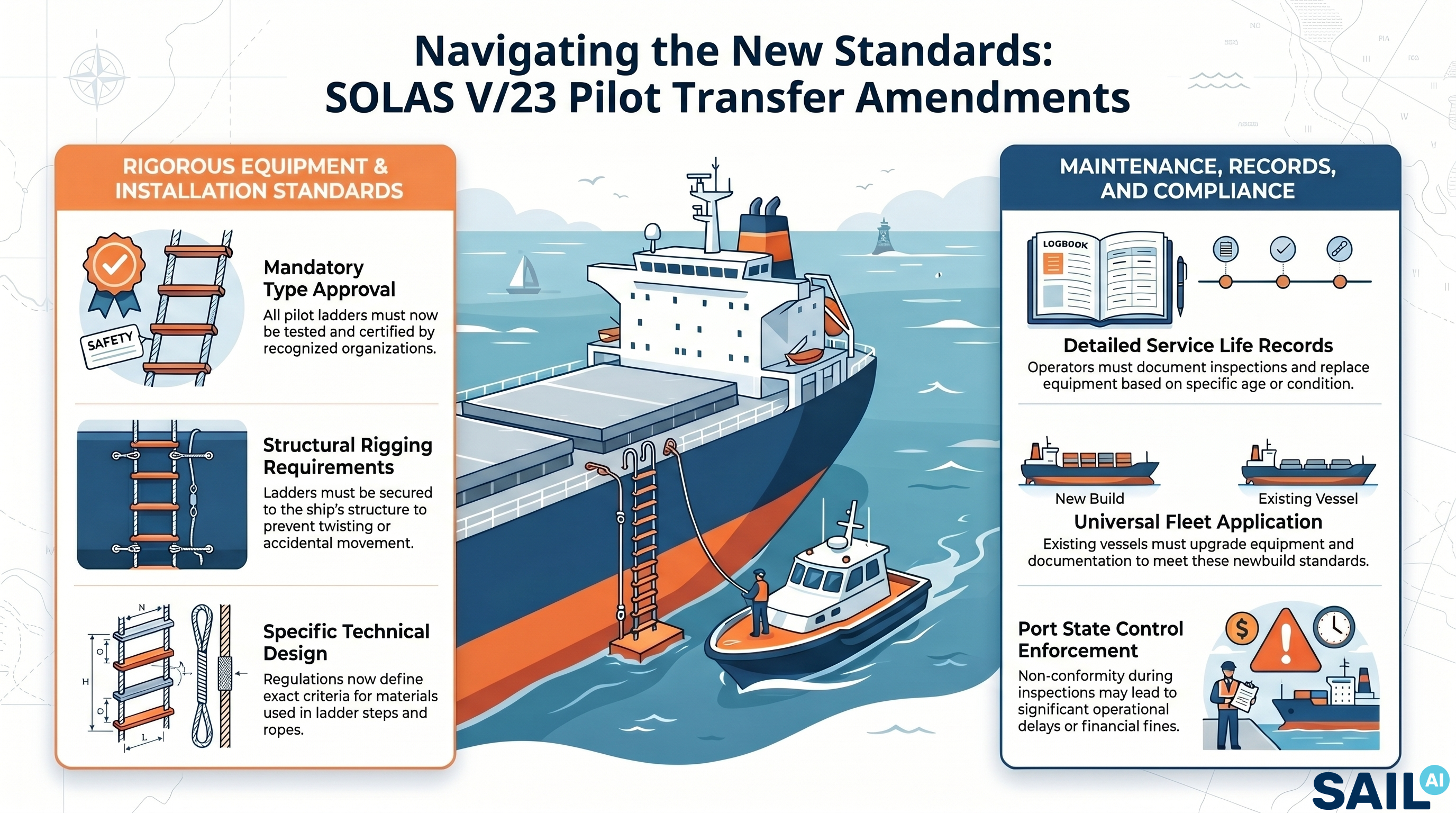
One of the most significant shifts in the new regulation is the move away from vague performance standards toward specific technical requirements. The updated SOLAS V/23 will now explicitly reference mandatory performance standards for the design and construction of pilot transfer arrangements. This means that equipment must be manufactured according to strictly defined criteria, ensuring consistency across the global fleet.
A vital part of the update involves the inspection and maintenance of the equipment. Under the new rules, shipowners and operators are required to maintain detailed records of the pilot ladder's service life. This includes documented inspections and, crucially, the replacement of equipment based on its condition or age. The goal is to eliminate the use of worn out or degraded ladders that have historically been a primary cause of transfer accidents.
New Standards for Equipment and Installation
The amendments introduce a mandatory requirement for the "type approval" of pilot ladders. This ensures that every piece of equipment used for pilot transfer has been tested and certified by recognized organizations. It removes the ambiguity regarding the quality of materials used in the steps and ropes of the ladder. Furthermore, the updated regulation provides clearer instructions on the installation of the transfer station itself.
Proper rigging remains a focal point. The new standards emphasize that the pilot ladder must be secured to the ship's structure in a way that prevents twisting or accidental movement. This includes specific requirements for the use of shackles, recovery lines, and the height of the ladder relative to the water level. For crew members involved in rigging the ladder, these technical details provide a clearer checklist to follow during preparation.
Impact on Ship Design and Existing Vessels
The MSC 110 updates do not only apply to new ships. While newbuilds must integrate these standards into their initial design, existing vessels will be required to upgrade their equipment and documentation to remain compliant. This might involve replacing older ladders with type approved models or installing new securing points that meet the updated strength requirements.
The transition period allows shipping companies to audit their current pilot transfer arrangements. It is essential for masters and deck officers to review their onboard procedures and ensure that the crew is trained on the new technical specifications. Compliance will be closely monitored during Port State Control inspections, and non conformity could lead to significant delays or fines.
Educational Resource for Seafarers
For a deeper understanding of the technical specifications, seafarers should consult the IMO Resolution on Performance Standards for Pilot Transfer Arrangements. This document provides the full engineering criteria and testing methods required for compliant equipment. Additionally, the International Maritime Pilots Association (IMPA) offers visual guides that are excellent for onboard training and daily reference.
Conclusion
The upcoming changes to SOLAS V/23 mark a proactive step in protecting the lives of those who serve the maritime industry. By standardizing the equipment and formalizing maintenance routines, the industry moves closer to eliminating preventable accidents during pilot transfers. For every mariner, staying informed about these updates is the first step in maintaining a culture of safety at sea.
Source: Maritime Cyprus, April 2026.
There are no comments.
Similar Posts
-
Major Flag States Advance Collaboration Through the International Flag State Association
Dec. 20, 2025, 10:42 a.m.
-
Updated IMO Guidelines for Port State Control: Key Changes Effective from January 2026
Feb. 4, 2026, 9:22 a.m.
-
Maintaining Safe Distance in Close-Quarters Maneuvers: A Key to Maritime Safety
Jan. 24, 2026, 10:30 a.m.
-
Updated IACS Guidelines: Enhancing Fire Safety on Ships
Jan. 16, 2026, 9:46 a.m.