
April 23, 2026, 7 p.m.
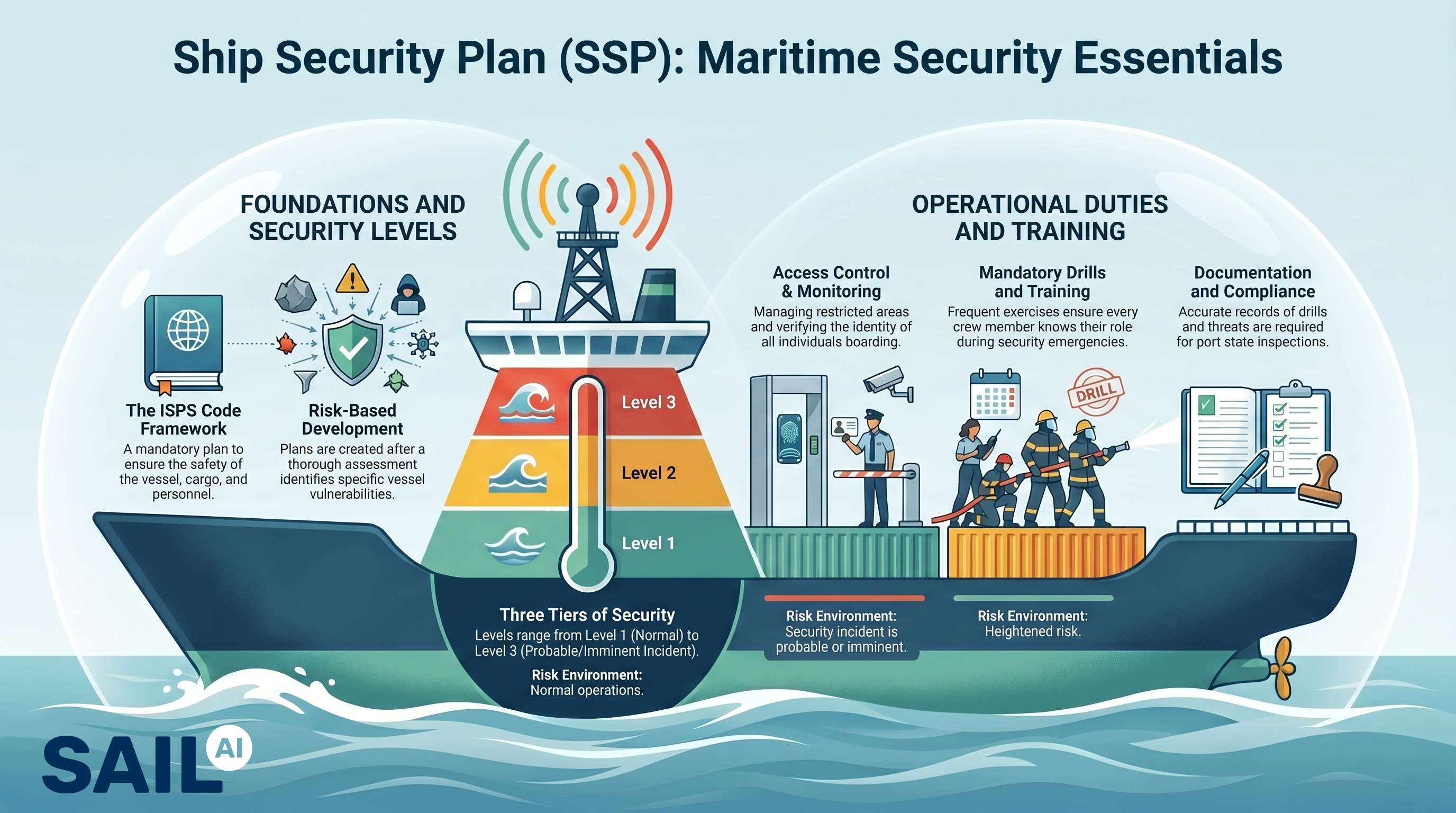
Maritime security remains a critical priority in the global shipping industry. The Ship Security Plan, commonly referred to as the SSP, serves as a vital document developed to ensure the safety of the vessel, its cargo, and the people on board. This plan is a requirement under the International Ship and Port Facility Security Code, also known as the ISPS Code. The primary purpose of the SSP is to establish protocols that protect the ship from various security threats, including piracy, terrorism, and unauthorized access.
The development of an effective security plan is not a random process. It starts with a Ship Security Assessment, which is a thorough evaluation of the vessel to identify potential vulnerabilities. Once these risks are analyzed, specific measures are designed to mitigate them. The Ship Security Officer and the Company Security Officer work together to ensure that the plan is practical and compliant with international standards.
Key Components of the Security Plan
A well structured SSP includes several mandatory elements that every crew member must understand. First, it defines the security levels as established by maritime authorities. Level 1 indicates normal operations, Level 2 suggests a heightened risk, and Level 3 is reserved for situations where a security incident is probable or imminent. The plan outlines specific actions for each level, ensuring the crew knows exactly how to respond when the threat environment changes.
Another crucial part of the plan is the control of access to the ship. This involves monitoring restricted areas such as the bridge, the engine room, and the steering gear room. The SSP provides instructions on how to verify the identity of individuals boarding the vessel and how to inspect cargo or baggage. Furthermore, it details the procedures for responding to security threats or breaches of security. This includes maintaining the ship’s security at all times, even when the vessel is in port or at anchor.
Duties and Training Requirements
The effectiveness of a Ship Security Plan depends entirely on the crew’s familiarity with its contents. Training and drills are essential components of shipboard life. The plan specifies the frequency and types of drills that must be conducted to prepare for various scenarios. These exercises ensure that every seafarer knows their designated role during an emergency.
Effective communication is also highlighted within the plan. It provides the necessary contact information for reaching port authorities and company representatives during a crisis. Keeping accurate records of security activities is another requirement. Documentation of drills, threats, and security incidents must be maintained as part of the vessel’s official records to prove compliance during inspections by port state control.
Conclusion for Maritime Professionals
Understanding the Ship Security Plan is more than a regulatory obligation. It is a fundamental part of professional seamanship. By adhering to the protocols outlined in the SSP, seafarers contribute to a safer working environment and help protect the integrity of the maritime supply chain. Continuous review and updates of the plan are necessary to address new and emerging threats in the maritime domain.
Resource: International Ship and Port Facility Security (ISPS) Code and provided by Marine Insight.
There are no comments.
Similar Posts
-
Ship's Safety Officer: Duties and Rights
July 29, 2025, 9:33 p.m.
-
How a Single Minor Component Failure Triggered Grounding, Sinking, and Port Blockage
June 1, 2026, 8:04 p.m.
-
Maritime Security and the Shadow Fleet: Swedish Authorities Intervene in Baltic Sea Case
May 4, 2026, 6:33 p.m.